Buying guide
Wooden cutting boards: how to choose and care for one
A good wooden board earns its place every day: you cut on it, serve on it and leave it out on the counter. Well chosen and well cared for, it lasts for years and gains a lovely patina. Here is how to choose the wood, size and shape, and keep it clean and beautiful.
Cutting or serving: two different jobs
A cutting board needs to be stable, thick enough and large enough to work without food sliding off. A serving board can be thinner and more sculptural: free-form, with a handle or a ring to hang it. Many boards do both, but if you often cut meat or bread, keep one board for chopping and another for the table.
Which wood?
- Olive wood: dense and hard with a striking grain, so every piece is unique. Perfect for serving cheese, charcuterie and bread.
- Acacia: hard, moisture-resistant and warm in tone, an excellent everyday chopping wood.
- Walnut: deep brown, gentler on knife edges and very elegant as a serving board.
Always choose a solid hardwood. Very soft woods scar quickly, and glass or stone boards dull your knives.
Size and thickness
- Everyday chopping: around 35 × 25 cm and 2 cm thick, a board that does not slip.
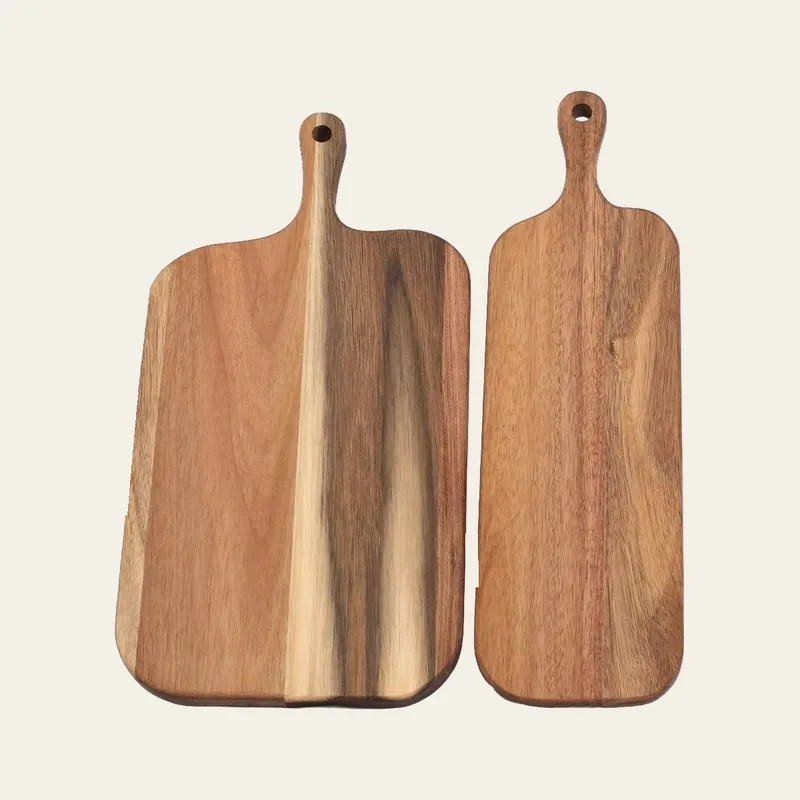
- Bread: a long, narrow board, ideally with a handle.
- Serving aperitifs: 40 cm or more, or two boards of different shapes side by side, like our walnut and acacia duo.
Is wood hygienic?
Yes, as long as it is looked after. A clean, dry hardwood board is a sound cutting surface. Wash it right after use, dry it upright and, if you can, keep one board for raw meat and another for vegetables and bread.
Care, step by step
- Washing: hot water and a little washing-up liquid, by hand. Never in the dishwasher, never left to soak.
- Drying: wipe it, then stand it on its edge so air reaches both sides and it does not warp.
- Smells and stains: scrub with coarse salt and half a lemon, then rinse.
- Oiling: about once a month, or whenever the wood looks dull, apply a thin coat of food-safe oil (food-grade mineral oil or a dedicated board oil). Leave it overnight and wipe off the excess.
Avoid cooking oils such as olive or sunflower oil, which can turn rancid over time.
Small scratches are normal
A wooden board marks with use: that is its patina. If the marks get deep, a light sanding with fine paper followed by oiling makes it look new again.
Frequently asked questions
Can I cut raw meat on a wooden board?
Yes. Wash it straight away in hot water and dry it well; ideally keep a board just for meat.
My board has cracked, why?
Cracks usually come from soaking or drying too fast near a heat source. Regular oiling reduces the risk.
Should I oil a new board?
Oiling before first use protects the wood and brings out the grain.
Going further
Pieces to discover
Pieces in this guide
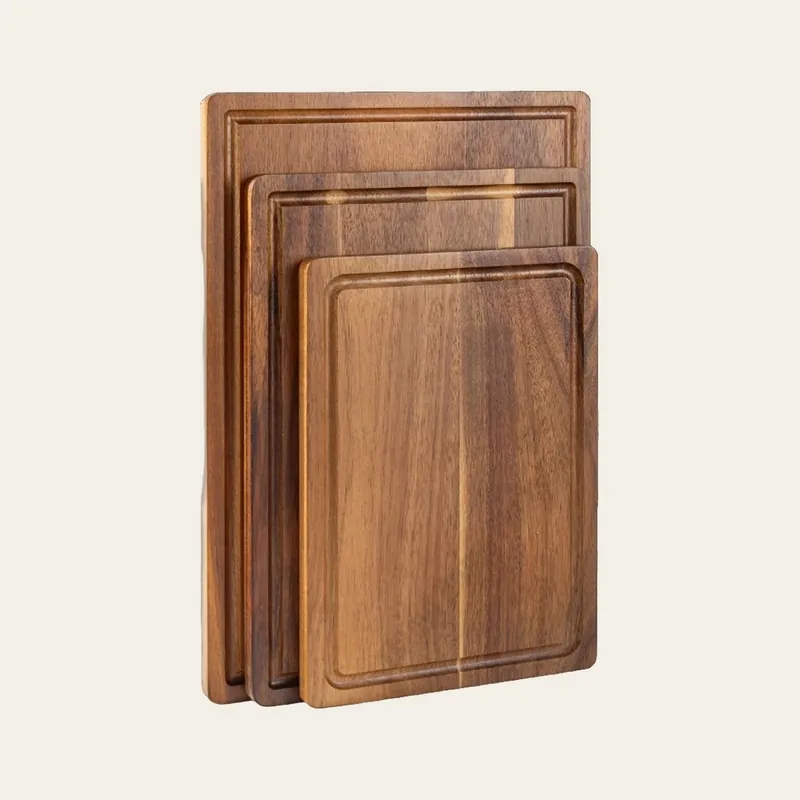
Acacia wood cutting board
From €74.90
Free-form olive wood board
From €57.90
Olive wood board with ring handle
From €87.90
Pair of serving boards, walnut and acacia
€60.90
Solid hardwood serving board, 5 shapes
From €36.90