Buying guide
How to wash linen sheets: drying and ironing
Linen is easy to wash and gets softer every time it goes through the machine. A few simple habits keep its colour, drape and softness for years. Here they are, from the first wash to storage.
Why linen is easy to care for
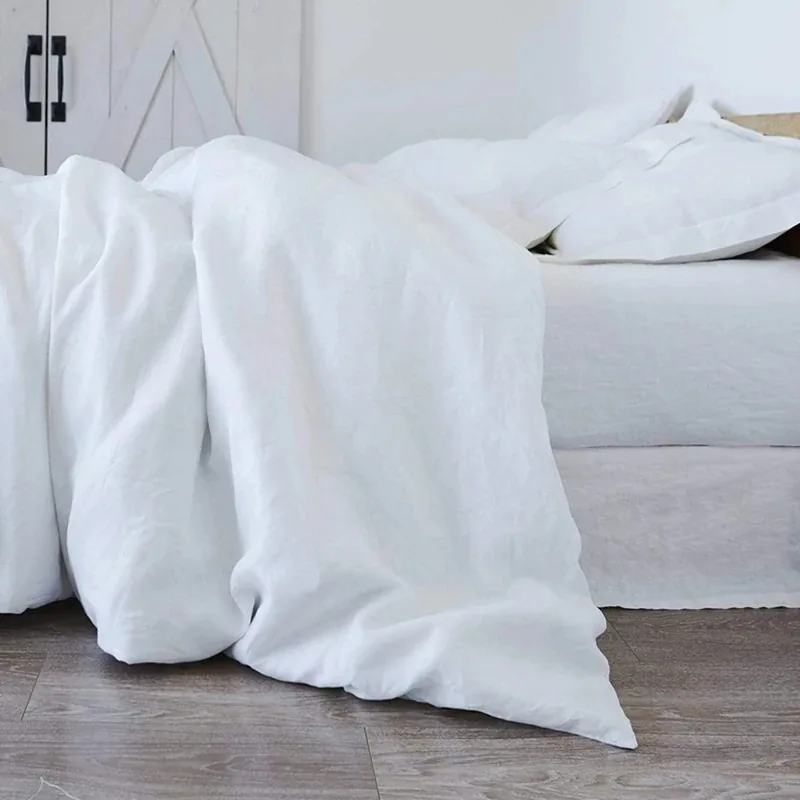
Linen is a long, strong fibre that is naturally hard-wearing, and even stronger when wet. It copes very well with machine washing and does not pill. What damages it is not water but excess: washing too hot, spinning too hard, drying too hot and harsh products. Washed linen, already softened at the end of production, is even easier to live with: it needs no starch and no ironing.
What temperature to wash linen sheets
For sheets, duvet covers, pillowcases and towels in linen, 40 °C (about 100 °F) on a gentle or “linen” cycle is the right everyday setting. White and natural linen can take 60 °C now and then, for example after an illness or for heavily used bath linen. Hotter washes wear the fibre faster and dull the colours. For deep shades, 30 °C is often enough. Always check the care label: it takes precedence over these guidelines.
Which detergent to use
- A mild liquid detergent, ideally without optical brighteners for coloured linen: brighteners whiten artificially and can shift natural shades.
- Use a light dose: too much detergent rinses out poorly and leaves the fibre rough.
- No bleach: it weakens the fibre and turns linen yellow.
- No fabric softener: it coats the fibre, reduces its ability to absorb moisture and eventually makes it less pleasant. Linen softens on its own, wash after wash.
The first wash
Wash new linen before you use it, on its own or with similar shades. Deep colours (green, terracotta, charcoal) may release a little dye in the first two or three washes, so wash them separately at first. This first wash also removes any finishing residue and immediately brings out the softness of the fabric. The same goes for all linen bedding, from a washed linen flat sheet to a full set.
Machine washing: the right settings
- Fill the drum to about two-thirds. Linen needs room to move; packed tight, it comes out with hard creases.
- Moderate spin, around 800 rpm. A very fast spin sets creases that are hard to remove.
- Close buttons and fastenings on duvet covers and turn them inside out to protect the colour.
- Avoid washing linen with terry towels or zipped garments, which can snag it or leave lint.
Hand washing works too, in lukewarm water, without rubbing or wringing: press the linen gently to remove the water.
Drying: line or low tumble
Line drying is ideal. Shake the linen out firmly when it comes out of the machine and hang it flat, in the shade if possible: strong, repeated sunlight can fade colours. In a tumble dryer, choose a low heat setting, take the linen out while still slightly damp and let it finish drying in the air. Drying too hot for too long makes linen stiff and can shrink it.
Does linen shrink?
Linen that has never been washed can shrink by a few per cent in its first wash. Washed linen has already been through that stage, which greatly limits shrinkage. The main risk is heat: very hot water and high-heat tumble drying. Stick to 40 °C and dry gently, and the dimensions stay stable.
Should you iron linen?
Not washed linen bedding: its soft crinkle is part of its charm and comfort. For a crisper look, iron it while still damp, on a medium to high setting, on the reverse side to avoid making the fibre shiny. A steam iron or garment steamer is enough for curtains or a tablecloth. A simple trick: put the duvet cover on the duvet while it is still slightly damp and it smooths out as it dries.
How to soften linen
Linen becomes softer with time and use. To speed things up without harming the fibre:
- Wash it often. Each cycle relaxes the weave a little more.
- Add a little white vinegar (a small glass) to the softener drawer: it removes detergent residue that makes the fibre rough, and leaves no smell once dry.
- Use wool dryer balls on a low tumble setting: they beat the linen gently and soften it.
- For very crisp new linen, a soak of a few hours in lukewarm water with a spoonful of baking soda, followed by a normal wash, also helps.
Washed linen is already supple from the first night; these habits simply enhance its feel.
Common stains
- Act fast and use cold water: hot water sets protein stains (blood, milk, egg).
- Wine or coffee: blot without rubbing, rinse in cold water, then rub with a little mild soap before washing.
- Grease or make-up: a little washing-up liquid or ox-gall soap, left for a few minutes before washing.
- Avoid harsh stain removers and large amounts of baking soda on dark colours.
Storing linen
Fold it completely dry and store it in a ventilated cupboard, away from direct sunlight that can fade natural shades. Avoid plastic bags: linen needs to breathe. Rotate at least two sets per bed so the linen can rest between uses and last longer. The same care applies to your linen table linen, your linen curtains (washed on their own at 30 °C, then rehung while still damp) and your bath linen.
Frequently asked questions
Can linen go in the tumble dryer?
Yes, on low heat, taking it out while still slightly damp. Air drying remains the gentlest option for the fibre.
Why is my linen rough after washing?
Usually because of too much detergent, hard water or drying too long in strong sun. Reduce the dose, add white vinegar to the rinse and shake the linen before hanging it.
Linen or cotton: which is easier to care for?
Both are machine washable; linen creases more but dries faster and needs no ironing when it is washed linen. Our comparison linen vs cotton sheets explains the differences, and our guide to choosing a washed linen duvet cover helps you find the right size.