Buying guide
Linen curtains: sizes, headings and care
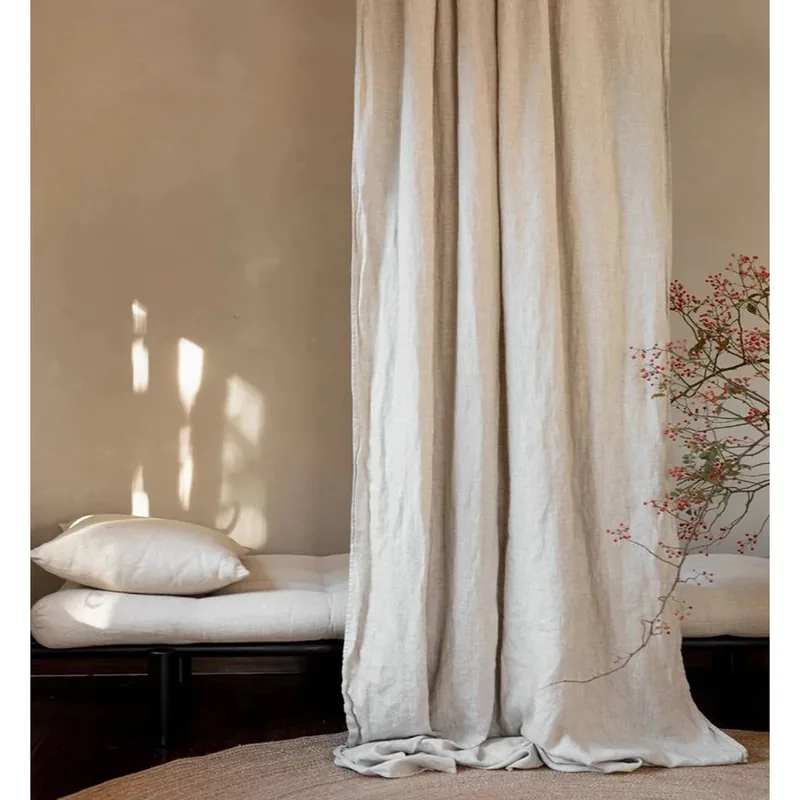
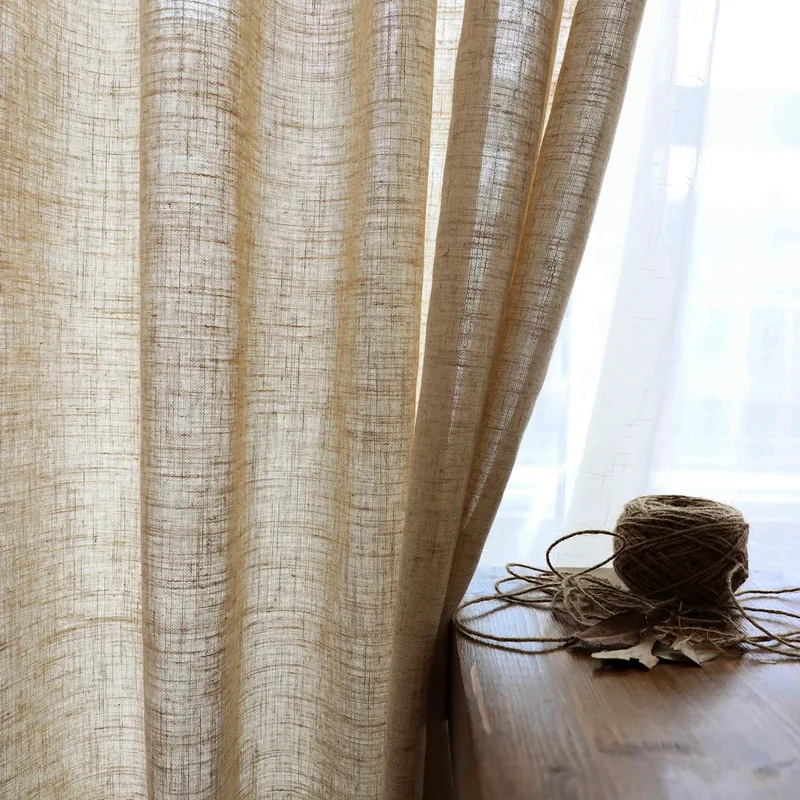
Linen filters light without blocking it and gives a room a very soft movement. A beautiful drape comes down to three choices: size, heading and weight.
Sheer or light-filtering?
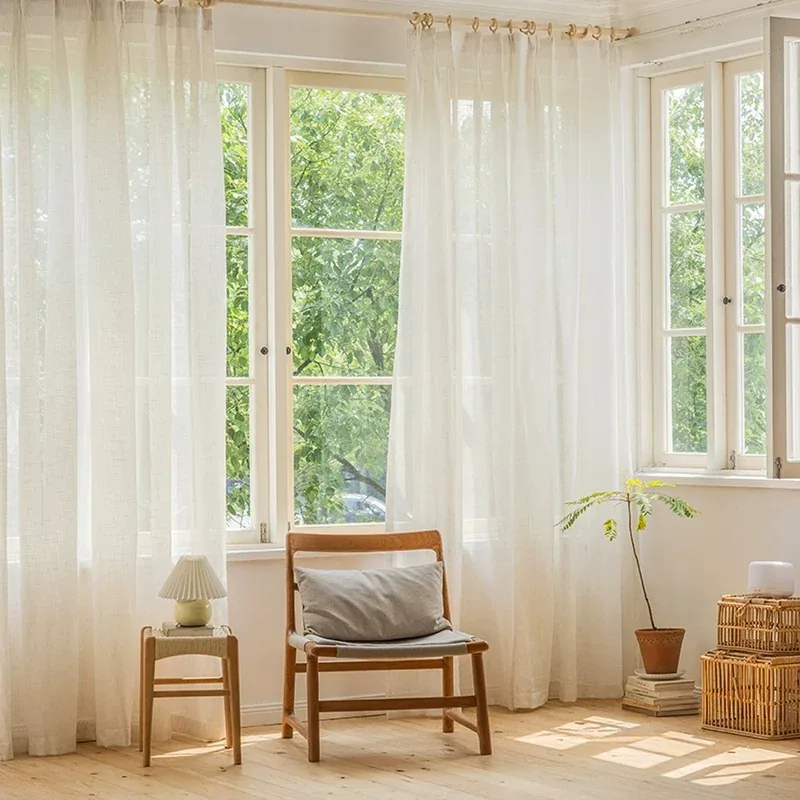
A sheer is translucent: it softens light, adds a little daytime privacy and still lets you see outside. A light-filtering curtain is denser: it filters more and hides the room from outside, without full blackout. Many windows look best with both: a white sheer against the glass and a natural linen curtain in front.
Measuring your window
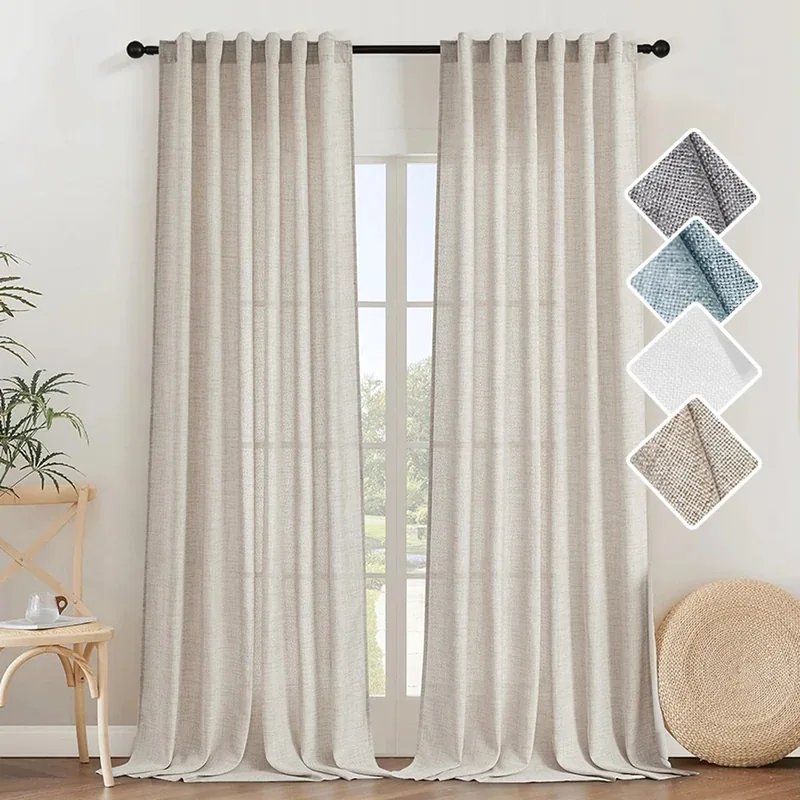
- Width: measure the rod, then plan a total fabric width of 1.5 to 2 times that length for generous folds. For a 150 cm rod, for example, use two panels of 138 to 150 cm.
- Drop: measure from the top of the rod (or rings) to the floor. Take off 1–2 cm for a curtain that just skims the floor, add 5–10 cm for a relaxed puddle.
- Linen may relax slightly after the first wash: keep a few centimetres in hand.
Rod pocket or eyelets?
A rod pocket (a channel sewn along the top) gives soft, gathered folds, ideal for curtains you rarely move. Eyelets create regular folds and slide easily: the best choice for a window you open and close every day.
Colour and light
White and natural linen warm up north light; light grey and sage calm a sunny south-facing room. A curtain in the same tone as the wall makes a room feel larger; a slightly deeper shade frames the window.
Care
- Machine wash at 30 °C on a gentle cycle, no bleach.
- Line dry and rehang while slightly damp; the creases fall out on their own.
- Between washes, a quick vacuum with the brush attachment is enough.