Buying guide
Incense holder guide: choose, use and care
An incense holder is something you look at as much as you use. It has to hold the incense, catch the ash and cope with heat, while sitting quietly in the room. Sticks, cones and bakhoor each need a different kind of holder. Here is how to pick the right one, use it safely and keep natural stone looking its best.
Sticks, cones or bakhoor: which holder for which incense
The type of incense decides the holder. Four cases cover almost everything:
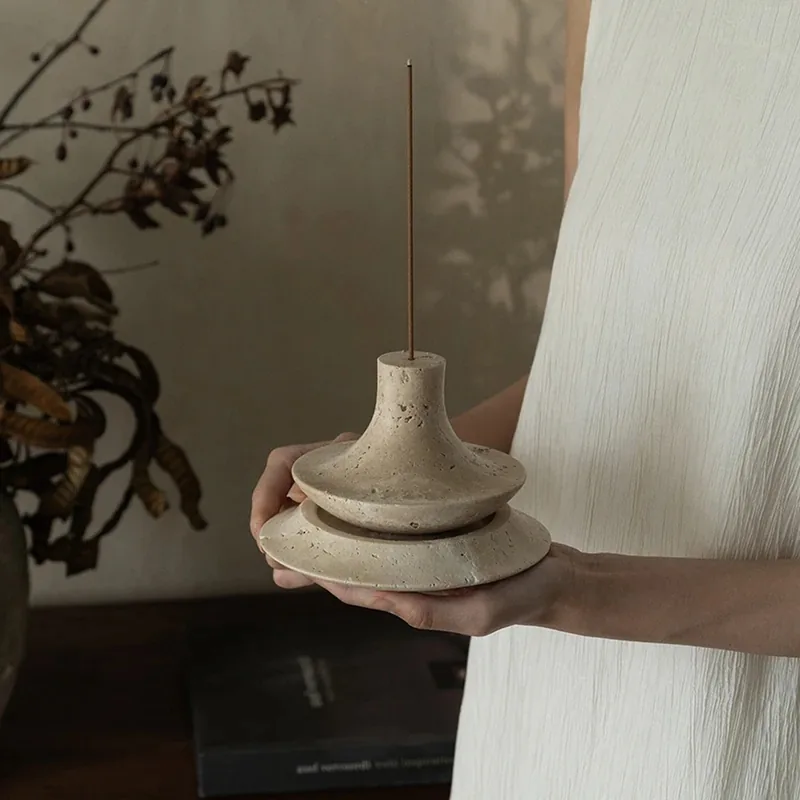
- Incense sticks: the most common kind. They stand upright or at a slight angle and the ash falls all around, so the holder needs to be wide enough to catch it. Our turned travertine incense holder is made for sticks: 15 cm across and 11 cm high, shaped to catch the ash.
- Japanese incense: thin sticks, usually without a bamboo core, that burn along their whole length. Set them in a low holder, or lay them flat on a bed of ash or sand in a small bowl.
- Cones: they sit flat and burn from the tip down, and the base gets much hotter than a stick. Use a flat dish in a non-flammable material such as stone, ceramic or metal. Backflow cones, whose smoke pours downwards, need a purpose-made burner with a hole through it.
- Bakhoor and resins: these do not burn on their own. They go on a lit charcoal, or an electric burner, in a bowl-shaped incense burner called a mabkhara.
Somewhere in between is the natural stone sphere incense holder: a small hollow sculpture, 10 cm across, hand-cut and polished, in ivory travertine, red travertine or black lava stone. You will find the full range in our stone incense holders and burners.
Bakhoor and the mabkhara: a way of welcoming guests
Across the Gulf, and the Arabian Peninsula more widely, burning bakhoor is part of daily life and of hospitality: it scents the home, greets guests and is sometimes used to perfume clothes. Bakhoor is made of wood chips, often oud, soaked in fragrant oils. Every household has its own habits and blends, and the mabkhara that holds it is as much a decorative piece as a practical one.
The ritual is simple: light a charcoal disc made for incense, wait until it is covered in a thin layer of white ash, then place one or two pieces of bakhoor on top. Resins such as frankincense or myrrh are burned the same way.
- The travertine and brass mabkhara burner: a travertine base under a pierced brass dome, for bakhoor and resins. Two models: a round one 10 cm high, or a taller footed one at 17.5 cm.
- The travertine incense burner with pierced lid: a travertine base with a silver-tone pierced metal lid, for bakhoor and incense, 15 or 19 cm high.
Travertine, stone, brass, ceramic or wood
- Travertine: a natural limestone with visible pores. It does not burn and copes easily with a glowing stick and warm ash. Being porous, it can hold on to marks from resins and oils, so a layer of sand or ash in the bowl helps protect it.
- Lava stone: dark and very porous, it makes pale ash stand out and has a raw, earthy look.
- Brass: it does not burn, but it does conduct heat. A metal dome or lid can get hot, so handle it once it has cooled. Brass slowly develops a soft patina.
- Ceramic: glazed ceramic is easy to clean, but like any ceramic it can crack with a sudden change in temperature.
- Wood: warm and simple, fine for a stick holder as long as the ember stays well clear of it. Avoid it for cones and charcoal, which can scorch or burn it.
For a design piece that lasts, stone is the safe bet: heat and ash do not bother it, and every piece has its own veining.
Safety first
- A flat, stable surface: not the edge of a table or a wobbly shelf. A heavy stone holder helps.
- Away from fabrics: keep curtains, sheers, cushions, throws and books well away, and nothing directly above the smoke.
- Protect what is underneath: heat passes through under a cone or charcoal, so place the burner on a heat-safe surface.
- Never leave it burning unattended: put it out before you leave the room or go to bed, and let charcoal cool completely before emptying the bowl.
- Let the air in: incense and charcoal make smoke. Open a window during and after, and avoid small closed rooms.
- Out of reach: of children and pets, and away from draughts that can blow embers about.
Caring for a travertine incense holder
Our product pages give the same rule for all these natural stone pieces: a soft, slightly damp cloth, no acidic products, and dry straight away.
- Let it cool before touching or cleaning it.
- Empty the ash regularly with a small dry brush before wiping.
- Avoid acids: vinegar, lemon and descalers attack the limestone and dull it.
- Dry immediately: porous stone should not stay damp.
For more, read our guide to caring for travertine.
Where to put it: japandi and wabi-sabi
A stone incense holder belongs wherever you want to slow down: an entryway console to welcome people home, a living room shelf, a reading corner. In the bedroom, burn incense well before bedtime with the window open.
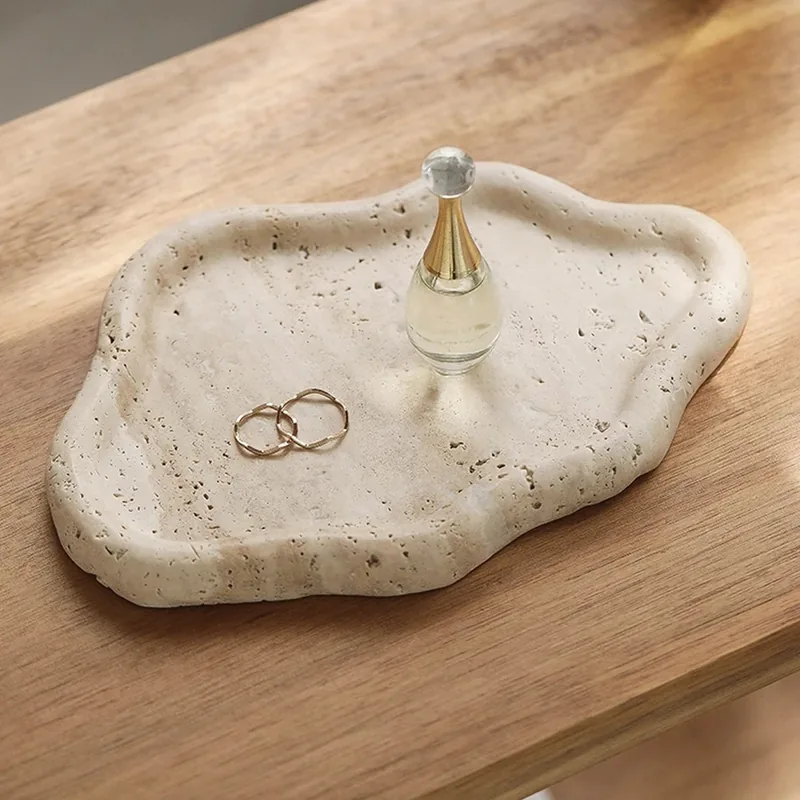
In a japandi or wabi-sabi interior, restraint is the rule: one piece, one raw material, a little empty space around it. Set the holder on a minimalist travertine tray (round, 14 or 20 cm) next to the travertine match pot, an egg-shaped piece of raw travertine made for long matches. Add a stone candle holder and you have a small still life. More ideas in our japandi and wabi-sabi guide and among our decorative objects.
FAQ
What kind of holder do I need for incense cones?
A flat dish in stone, ceramic or metal, placed on a heat-safe surface. Avoid wood and very thin holders.
How do I use an incense burner for bakhoor?
Light a charcoal disc made for incense, wait until it turns white, place it in the bowl and add a piece of bakhoor. Let everything cool before emptying.
How do I clean a travertine incense holder?
Once cold, brush away the ash, wipe with a soft, slightly damp cloth without any acidic product, and dry straight away.
Why does my incense holder look different from the photo?
Because the stone is natural: every piece has its own veining and pores.
Going further
Pieces to discover
Also worth exploring
Pieces in this guide
Turned travertine incense holder
£152.90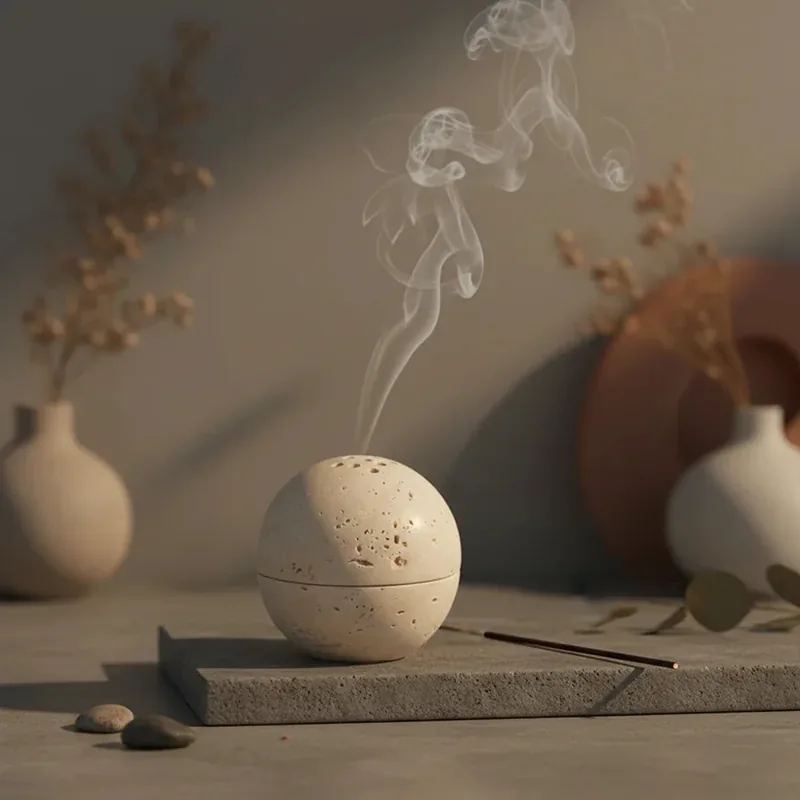
Natural stone sphere incense holder
From £90.90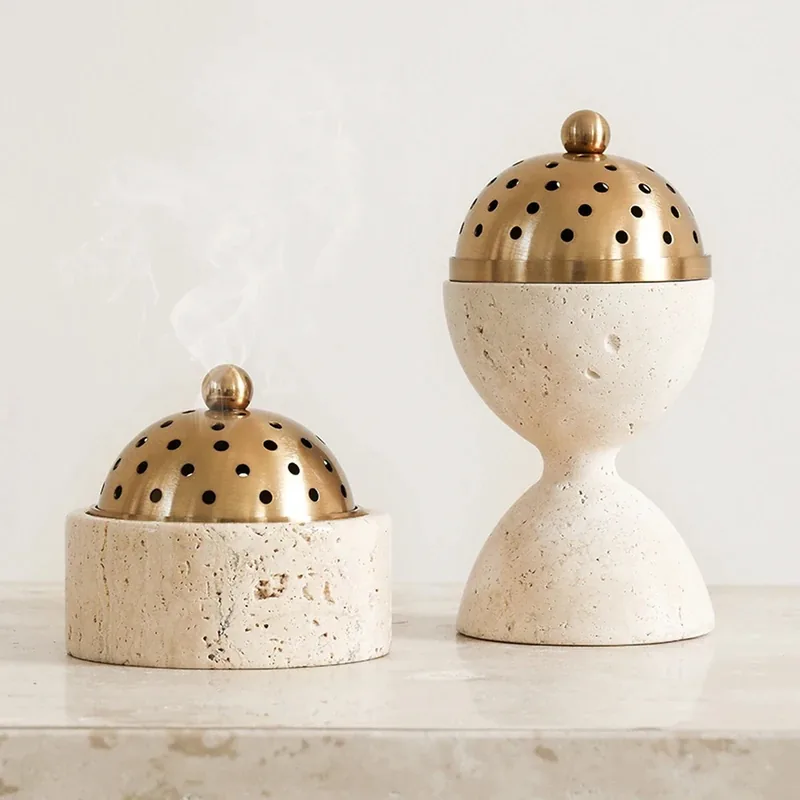
Travertine and brass mabkhara burner
From £122.90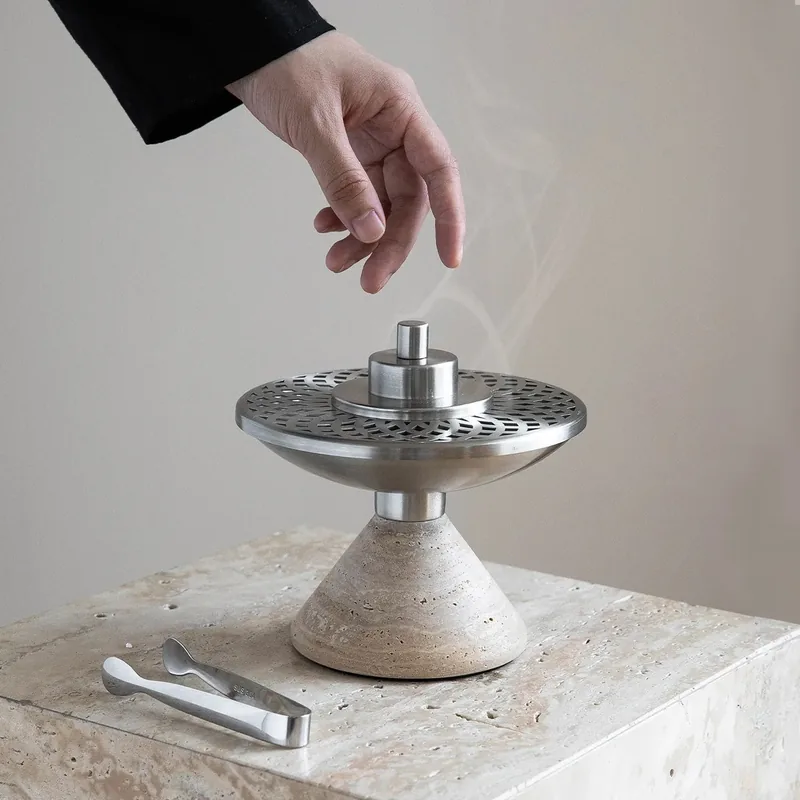
Travertine incense burner with pierced lid
From £174.90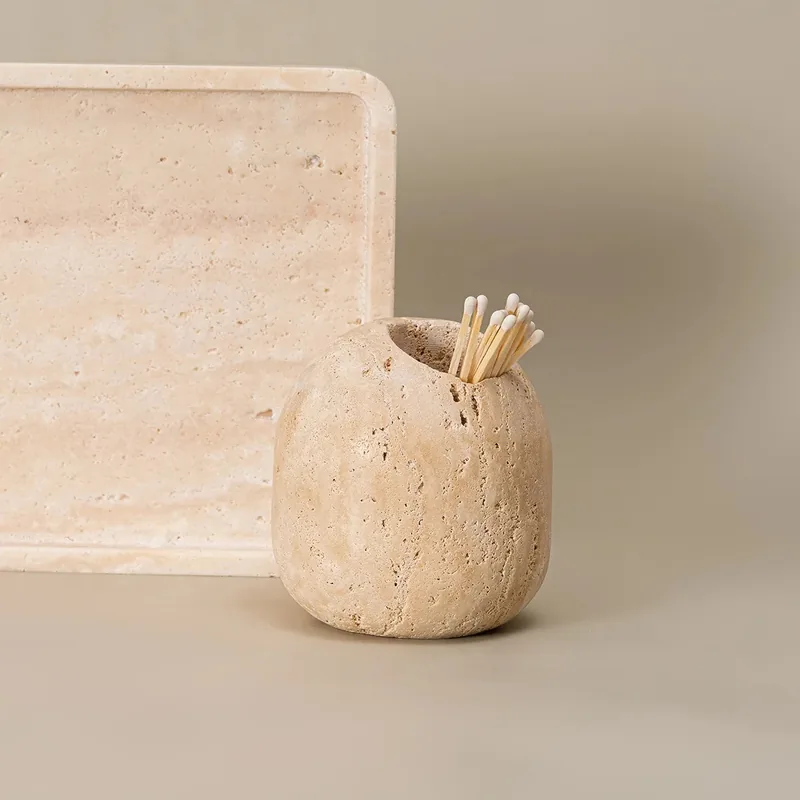
Travertine match pot
£85.90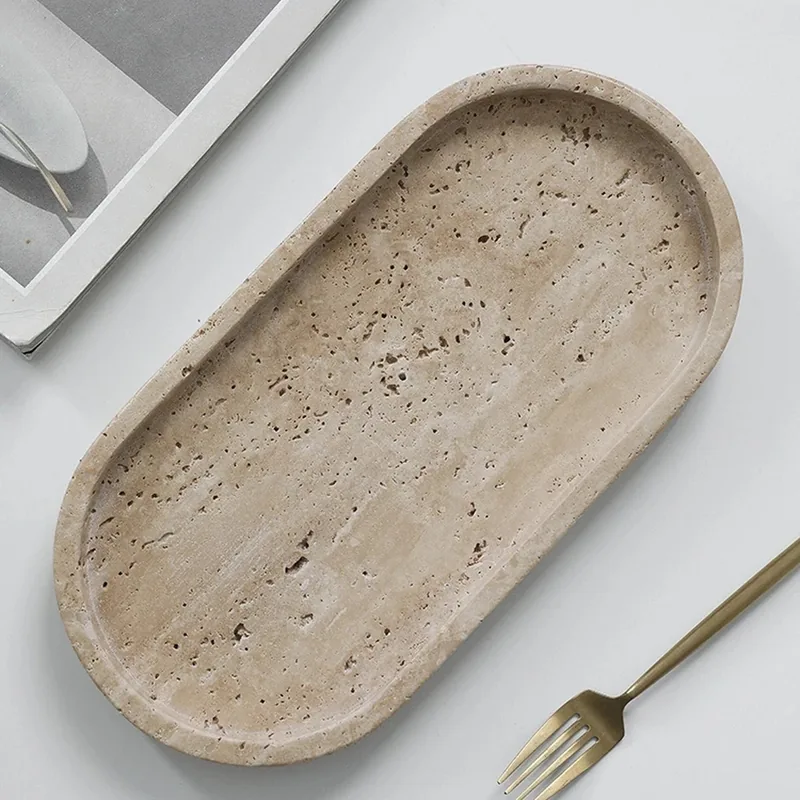
Minimalist travertine tray
From £68.90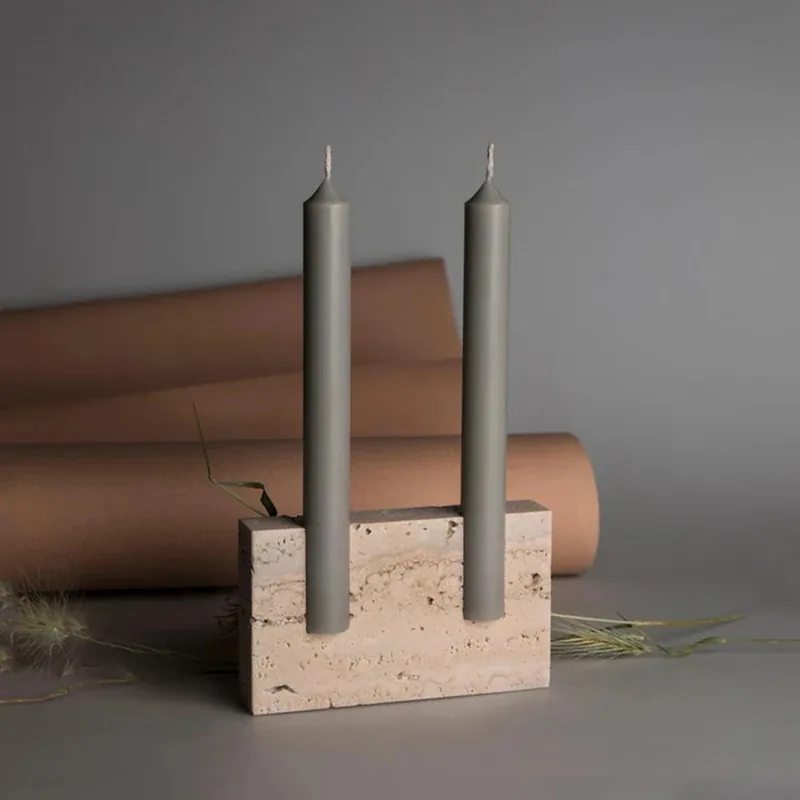
Raw travertine block candle holder
£65.90