Buying guide
How to clean travertine: care, sealing and decor
A limestone formed by mineral-rich springs, travertine is recognisable by its pores and sandy tones. It brings a material that is both raw and soft, as long as you know its few needs. Here is how to choose it, clean it and protect it.
What is travertine?
Travertine is a limestone formed when calcium carbonate is deposited around springs, often hot springs, that are heavily charged with minerals. As water and carbon dioxide escape, they leave successive layers of limestone behind, sometimes trapping gas bubbles and plant debris. Its name comes from the Latin lapis tiburtinus, the “stone of Tibur”, today’s Tivoli near Rome: much of the Colosseum is built from it. It is quarried today in several countries, notably Italy, Turkey and Iran.
Its tones range from cream to honey, through beige, hazel and sometimes pinkish or silvery hues. Its veins and pores mean no two pieces are ever the same.
Why does travertine have holes?
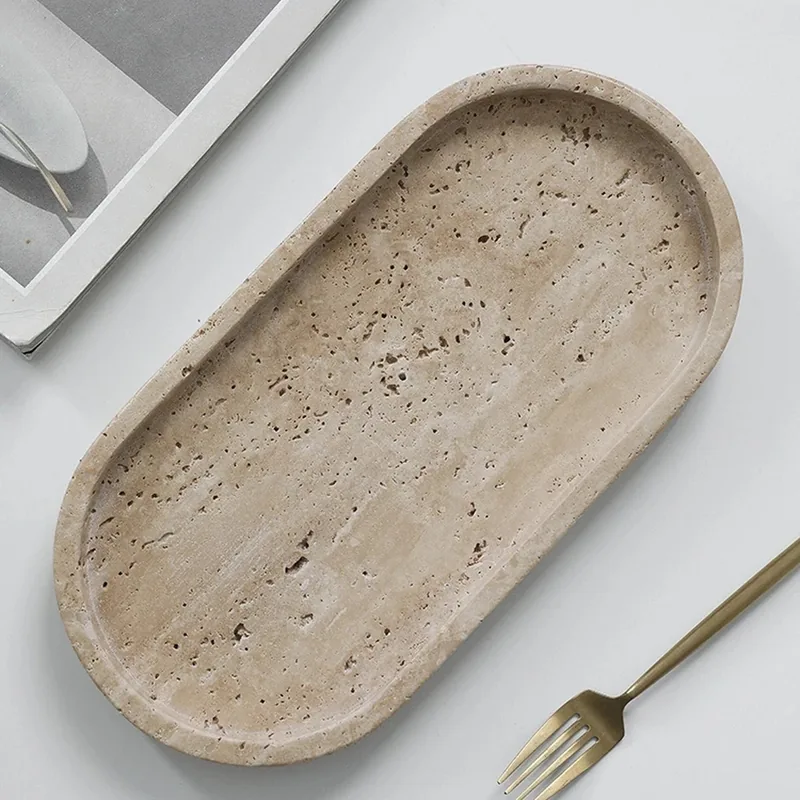
The small cavities are travertine’s signature: they come from gas bubbles and plant matter caught in the rock as it formed. For floors and worktops they are often filled with a filler or resin to give a closed surface. For decorative objects they are usually left open: the texture is the stone’s charm, but it needs a little more care around liquids and dust.
Finishes
- Raw: the stone keeps a mineral, almost archaeological look, with clearly visible open pores.
- Honed: finely sanded, matte and soft to the touch; the most common finish for trays and vases.
- Polished: smoother and slightly glossy, it brings out the veins.
- Tumbled or brushed: rounded edges and an undulating surface for a weathered look.
Travertine vs marble
Both are calcium-based stones and react the same way to acids. Marble is rock transformed by heat and pressure: it is denser, cooler-looking and takes a high polish. Travertine, more porous, stays warmer and more matte. They work beautifully together, for example a veined marble candle holder next to a travertine tray.
How to clean travertine
- A soft, slightly damp cloth is enough day to day; add a drop of pH-neutral soap or a natural-stone cleaner if needed.
- Never use vinegar, lemon, bleach, descaler or acidic all-purpose cleaners: acidity dissolves limestone and leaves permanent dull marks.
- Avoid abrasive sponges and scouring creams, which scratch the surface.
- Dust the pores with a soft paintbrush or a soft toothbrush.
- Always dry after cleaning, especially in the bathroom, to avoid limescale rings.
Should you seal travertine?
It is the best protection for a porous stone. A penetrating sealer (water and oil repellent) for natural stone soaks into the stone and limits the absorption of water, oil and stains without forming a film or changing the look (check for “no wet look” if you want to keep the natural matte finish).
- Clean the piece and let it dry completely, at least a day.
- Apply the sealer with a brush or cloth in a thin, even coat, including the edges.
- Wipe off the excess after a few minutes, before it dries on the surface.
- Respect the stated drying time before use.
To know when to reseal, do the water-drop test: if the drop beads, the protection is working; if the stone darkens quickly, it is time to treat it again. For a tray in daily use, once or twice a year is usually enough. If the piece will be in contact with food, choose a product that is explicitly suitable for that use.
Removing stains
- Wine, coffee, tea: blot immediately, then clean with water and neutral soap.
- Oil or grease: sprinkle with talc or fuller’s earth, leave for several hours to absorb, then brush off. Repeat if needed.
- Candle wax: let it harden, then lift it gently with a wooden or plastic spatula; never scrape with a blade.
- Dull mark from acid: this is not a stain but etching of the surface; on a small object it blends into the patina over time.
Travertine around the home
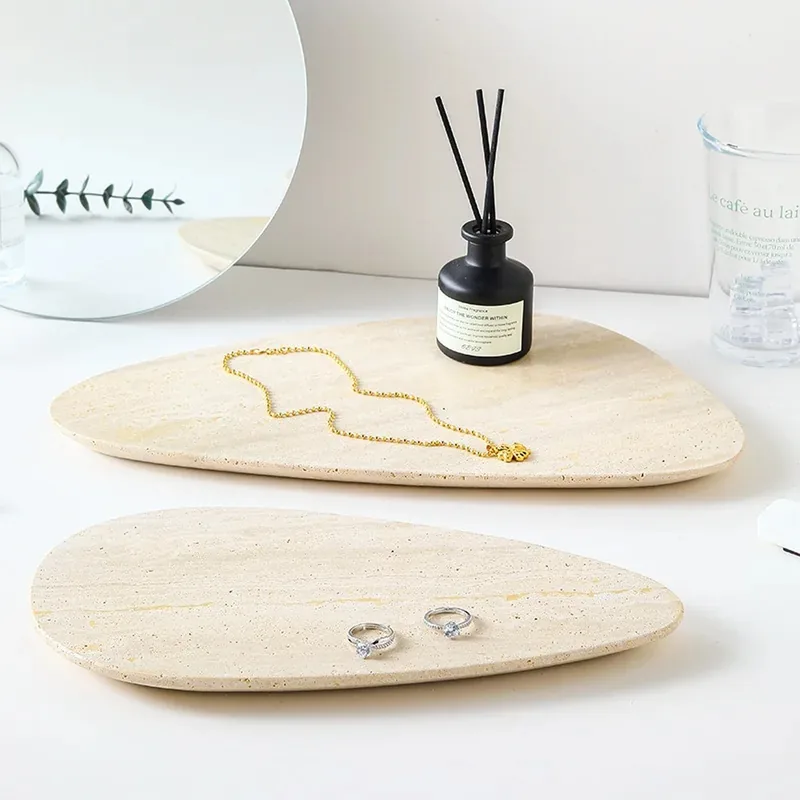
Trays: on a coffee table, a minimalist travertine tray gathers candles, books and small objects; in the bathroom it holds bottles and jewellery, as long as you wipe away standing water. All our models are in stone trays.
Vases: a travertine vase looks superb with branches or dried flowers. As the stone is porous, slip a glass tube or small glass container inside for fresh flowers. See our other vases and our guide to choosing a vase and arranging flowers.
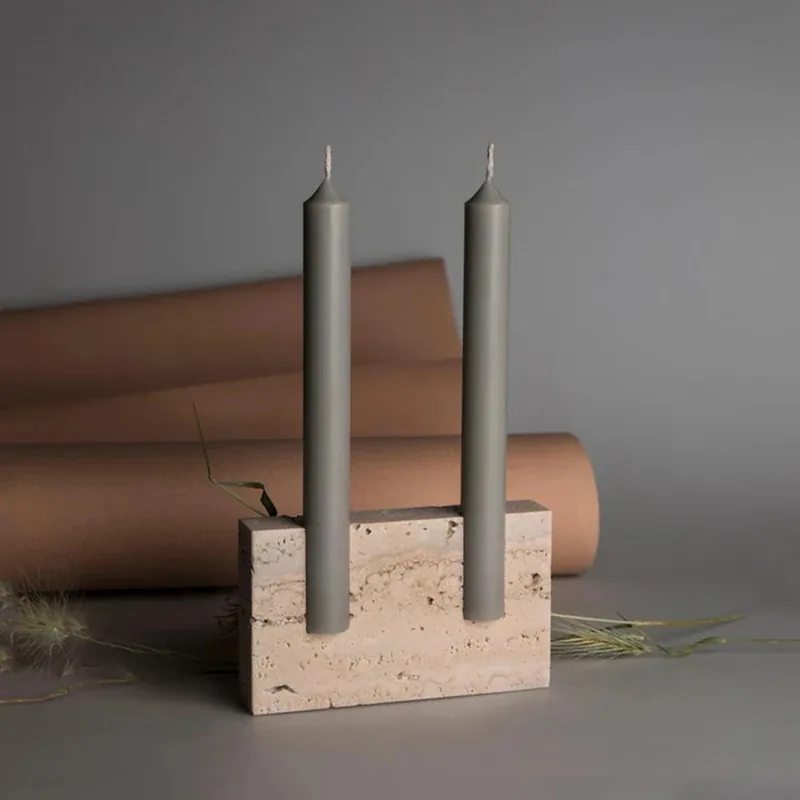
Candle holders: a raw travertine candle holder easily withstands the heat of a candle; use dripless candles or a small dish, because wax seeps into the pores.
At the table: a travertine bowl presents fruit and bread beautifully. Avoid placing cut citrus, dressings or oily cheese directly on it; a sheet of baking paper or a small board is enough.
What goes with travertine?
Its warm tones pair naturally with natural linen, light or dark wood, matte ceramics and brass. For a calm effect, work tone on tone: a travertine tray, a cream ceramic vase and ecru linen. For more contrast, set it on dark wood or next to a matte black object.
Frequently asked questions
Is travertine damaged by water?
No, clean water does not harm it. Hard water drying on the surface and, above all, acidic or oily liquids are the problem. Wipe and dry, and protect the stone with a sealer.
How can you tell real travertine?
Real stone is heavy, cool to the touch, and its pores and veins never repeat exactly. Resin or ceramic imitations are lighter, warmer, and their pattern may repeat.
Does travertine change over time?
It develops a light patina, especially with a raw finish: edges soften and the colour warms. With gentle care it keeps its beauty for a very long time.