Buying guide
Rattan, wicker, raffia, seagrass: the differences
They are often lumped together as “wicker”, yet rattan, willow, raffia and seagrass are four different plants, each with its own feel, strength and way of filtering light. Knowing them apart helps you put the right piece in the right place.
Rattan: the climbing-palm fibre
Rattan comes from the stems of climbing palms, mainly of the genus Calamus, which grow in the tropical forests of South-East Asia. Unlike bamboo, which is hollow, its stem is solid, very strong and flexible: steamed, it bends and holds its shape as it cools. It gives two materials: the skin, cut into fine glossy strips used for cane webbing, and the core, made into even strands for weaving.
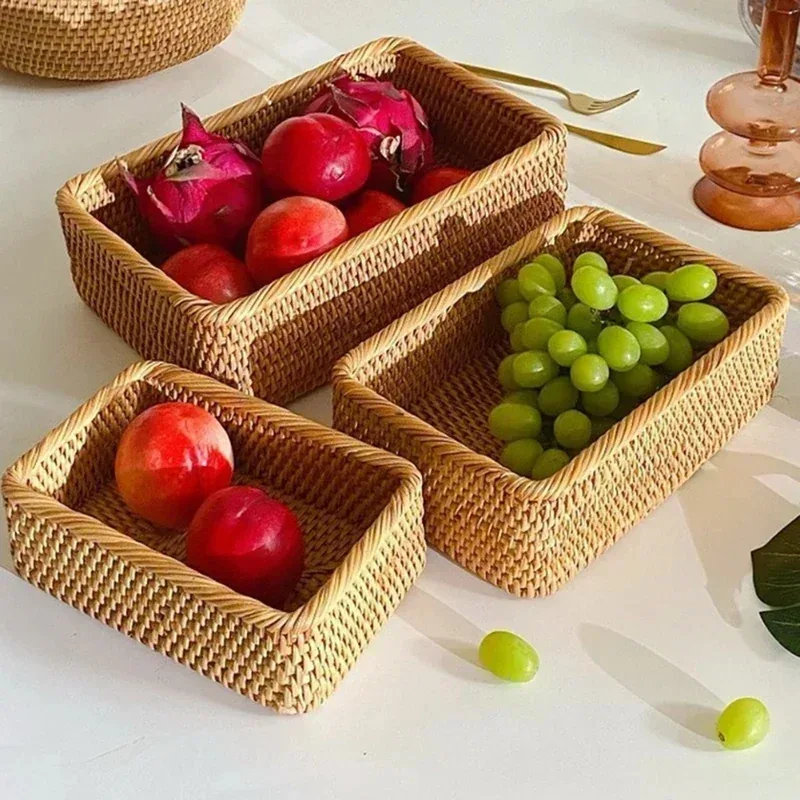
You can recognise it by its even, slightly satin strands and its honey colour, which mellows with time. Sturdy, it suits pieces that must keep their shape: large pendant lights, baskets, boxes, headboards.
Wicker and willow: a technique and a tradition
Here the vocabulary matters. In English, wicker is the weaving technique, whatever the material: a wicker basket can be rattan, willow or another fibre. Willow, the traditional European basketry material, uses the young shoots of the willow tree, cut in winter. With its bark it is brown; peeled, it turns white or buff. Its rods are thinner and more matte than rattan, and taper towards the tip.
Raffia: a soft, matte palm leaf
Raffia comes from the leaves of palms of the genus Raphia, Madagascar being a well-known source. The leaves are cut into strips, dried, then woven, crocheted or braided. The result is light, supple and matte, with an almost textile feel. It does not hold a shape on its own, so it is mounted on a frame, as in a lampshade or a drum ceiling light.
Seagrass: a grass, not seaweed
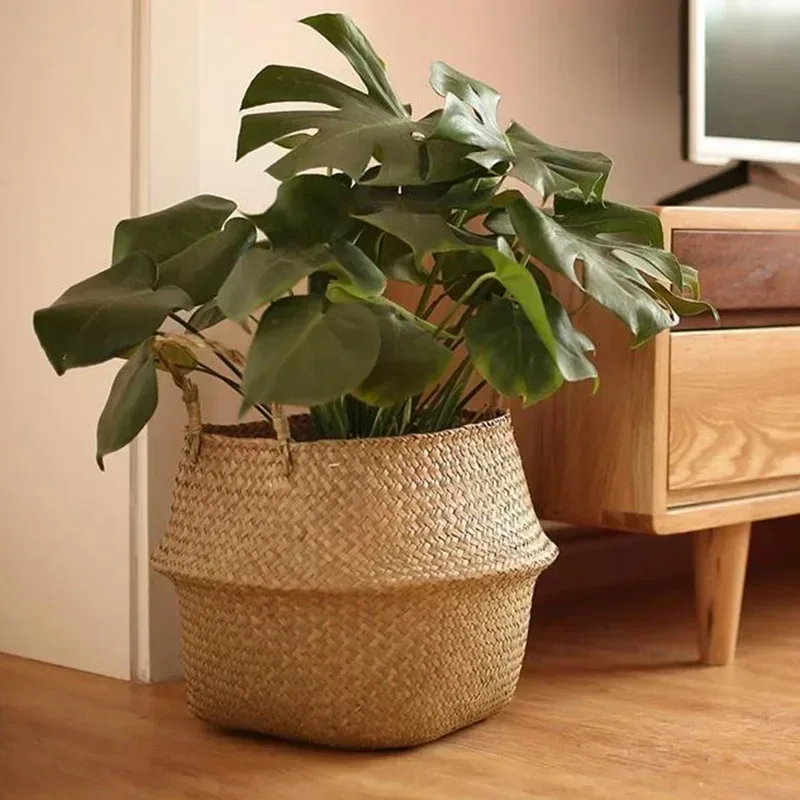
Despite its name, seagrass has nothing to do with seaweed. It is a wetland grass, grown in flooded fields, whose stems are twisted into cord. The twist makes it very strong, with a smooth, slightly glossy surface in green, beige and golden tones. It sometimes smells faintly of hay for the first few days. It is used for baskets, plant pots and rugs because it copes well with handling.
What about bamboo, jute and cane?
Bamboo is a grass with a hollow, segmented stem: you can spot it by its pronounced nodes, and it splits into flat slats rather than round strands. Jute is a textile fibre taken from the stem of a herbaceous plant, spun into rope or woven into cloth for rugs and some pendant lights. Cane webbing, finally, is not a material but a star-shaped weave of rattan skin strips, typical of chair backs and furniture doors.
Choosing by room
- Dining room: an open-weave rattan pendant over the table for lively, patterned light.
- Bedroom: raffia or linen for a soft glow, and a seagrass basket for throws at the foot of the bed.
- Bathroom: small rattan or seagrass baskets, as long as the room is well ventilated.
- Hallway: a large seagrass or willow basket for shoes and scarves.
Which gives the best light?
For a light fitting, the fibre changes everything. An open-weave rattan pendant casts graphic shadows on walls and ceiling: ideal over a table where you want lively light. A raffia ceiling light, denser, gives a soft, even golden glow: perfect in a bedroom or living room. Woven rush sits in between, warm and textured.
A few pointers: a cone-shaped woven rattan pendant directs light downwards, a raffia drum ceiling light spreads it widely. For diameter and hanging height, see our guide to , and browse all our .
Rattan basket, seagrass or willow: which for what?
- Rattan: rigid baskets for bread, fruit or a bathroom shelf. A woven rattan basket keeps its shape and is easy to clean.
- Seagrass: large baskets for throws, toys, laundry or a plant. The round-bellied seagrass basket is supple and folds flat; the seagrass plant pot has a waterproof lining.
- Willow: market baskets, hampers and traditional storage.
- Raffia: small baskets and light pouches, mostly decorative.
See the full selection in baskets and storage.
Caring for natural fibres
- Dust regularly with a soft brush or a vacuum with a brush attachment, without pressing.
- Avoid prolonged damp: a seagrass or rattan basket can live in a well-ventilated bathroom, but should never stay wet. If needed, wipe with a barely damp cloth and let it air dry.
- Avoid direct sun and radiators, which dry the fibre and can make it brittle or fade it.
- For light fittings, use an LED bulb, which runs very cool, and respect the stated wattage.
- A strand that sticks out can be trimmed neatly or glued back with a drop of wood glue.
Frequently asked questions
Which fibre is the strongest?
Rattan, thanks to its solid stem, is the strongest and most durable for objects that must keep their shape. Twisted seagrass stands up very well to handling; raffia is the most delicate.
Can natural rattan go outdoors?
Not permanently: rain and sun damage it. “Woven” garden furniture is usually synthetic resin. Keep natural rattan indoors or under a dry shelter.
How can you tell rattan from willow?
Rattan strands are even from end to end, with a satin look and sometimes small, widely spaced nodes. Willow rods are thinner, taper at the end and look more matte. All these fibres pair beautifully with linen and ceramics, as in a Japandi or wabi-sabi interior.